

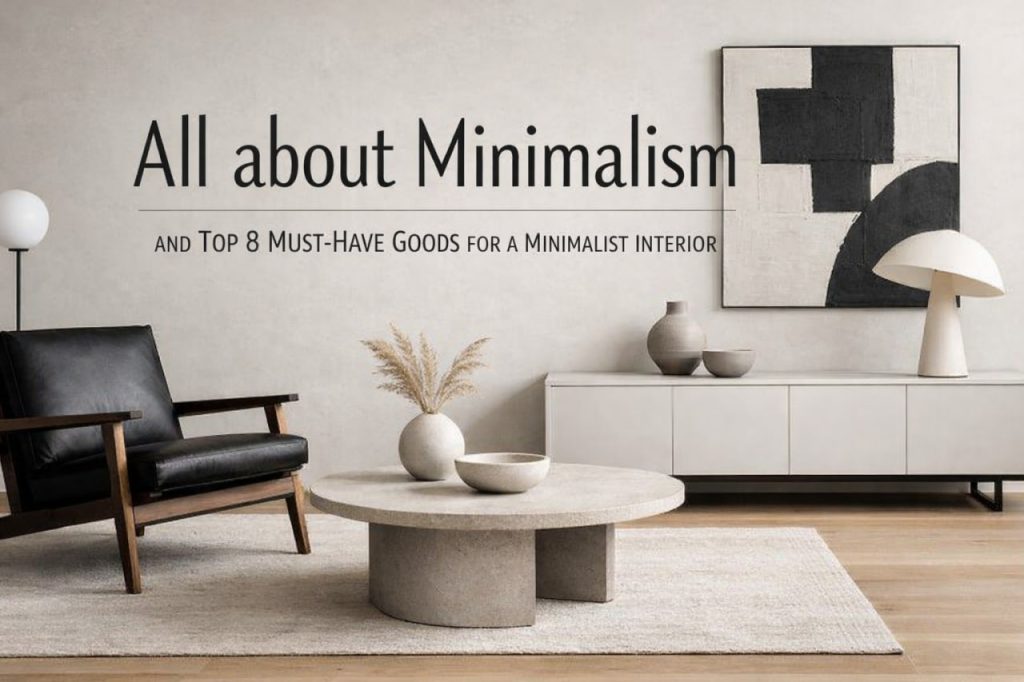
Minimalism in interior design is not about emptiness — it is about intention. Every object has a purpose, every line has meaning, and every space breathes. Below is a curated selection of eight essential products that perfectly embody the philosophy of minimalist interiors, combining functionality, aesthetics, and timeless design.
Affiliate Disclosure — UsefulHomeTools
Some links on UsefulHomeTools direct you to eBay and other retailers. If you click a link and make a purchase, we may receive a commission at no extra cost to you.
These commissions help us test home tools and create guides for DIYers. Recommendations are based on our research and are not influenced by any affiliate partnership.
A Brief History of Minimalism
Minimalism as a design philosophy took shape in the mid-20th century, emerging as a response to visual excess, mass production, and decorative overload. Its roots lie in modernist architecture and art movements that emphasized clarity, structure, and purpose. Influences from Japanese Zen aesthetics — particularly the ideas of balance, emptiness, and harmony with nature — played a crucial role in shaping minimalist thinking.
In the 1960s and 1970s, minimalism gained prominence in art and architecture, where designers stripped objects down to their essential forms. This approach rejected ornamentation in favor of proportion, material honesty, and spatial logic. Interiors became lighter, more open, and more intentional, with space itself treated as a design element rather than something to be filled.
 GetHomeTools — your best choices for home
Over time, minimalism evolved beyond a visual style into a broader lifestyle concept. In contemporary interiors, it represents a conscious choice to slow down, focus on quality, and create environments that support clarity and well-being. Today’s minimalism is warmer and more human-centered, blending clean lines with natural materials and subtle textures to create spaces that feel both refined and deeply livable.
Key Aspects of Minimalist Style
Minimalism is not defined by the absence of objects, but by the presence of meaning. At its core, minimalist style is about reducing visual noise to reveal structure, proportion, and intention. Every element within the space is chosen consciously, contributing to a cohesive whole rather than competing for attention.
Simplicity of Form and Line
Clean, clear lines are fundamental to minimalist interiors. Furniture and architectural elements are designed with straightforward geometry, avoiding unnecessary curves, ornamentation, or decorative detailing. This simplicity allows the eye to move freely through the space, creating a sense of order and calm. Forms are often low and horizontal, reinforcing stability and visual balance.
Functional Clarity
In minimalism, function dictates form. Every object must serve a purpose — and ideally, serve it well. Multifunctional furniture, concealed storage, and modular systems are common solutions that support everyday living without clutter. When functionality is clearly expressed, the space feels intuitive and effortless to use.
Neutral and Restrained Color Palette
Minimalist interiors rely on a limited color spectrum to maintain visual harmony. Whites, soft greys, warm beiges, and muted earth tones dominate, often layered in subtle variations rather than sharp contrasts. Color is used to support form and material, not to dominate the space. This restrained palette enhances light, depth, and spatial continuity.
Material Honesty and Quality
Rather than decorative finishes, minimalism celebrates the natural qualities of materials. Wood shows its grain, stone reveals its texture, metal retains its weight and presence. High-quality materials are essential because they are often left exposed and unembellished. In minimalist design, authenticity replaces ornament.
Balance, Proportion, and Negative Space
Empty space is not a void — it is an active design element. Negative space allows objects to breathe and gives the interior its rhythm. Proper proportions between furniture, walls, and open areas create visual comfort. A well-balanced minimalist interior feels composed, never sparse or unfinished.
Light as a Design Tool
Natural light plays a central role in minimalist spaces. Large windows, open layouts, and light-reflective surfaces amplify daylight, making interiors feel airy and expansive. Artificial lighting is carefully layered to complement natural light, often through indirect or ambient sources that enhance mood rather than dominate the room.
Emotional Calm and Mental Clarity
Beyond aesthetics, minimalism is deeply connected to well-being. By reducing visual complexity, minimalist interiors promote focus, relaxation, and a sense of control. The result is an environment that supports clarity of thought and emotional balance — a space that feels restorative rather than stimulating.
Tips for Designing Your Home in a Minimalist Style
- Start by decluttering — remove everything that doesn’t serve a purpose or bring joy
- Choose a cohesive color palette and stick to it
- Invest in fewer, better-quality items rather than many inexpensive ones
- Let natural light play a key role in your interior
- Embrace empty space — it creates calm and visual rhythm
Minimalism is not achieved overnight; it’s a thoughtful, evolving process.
Top 8 Minimalist Interior Products
1. Minimalist Lounge Chair
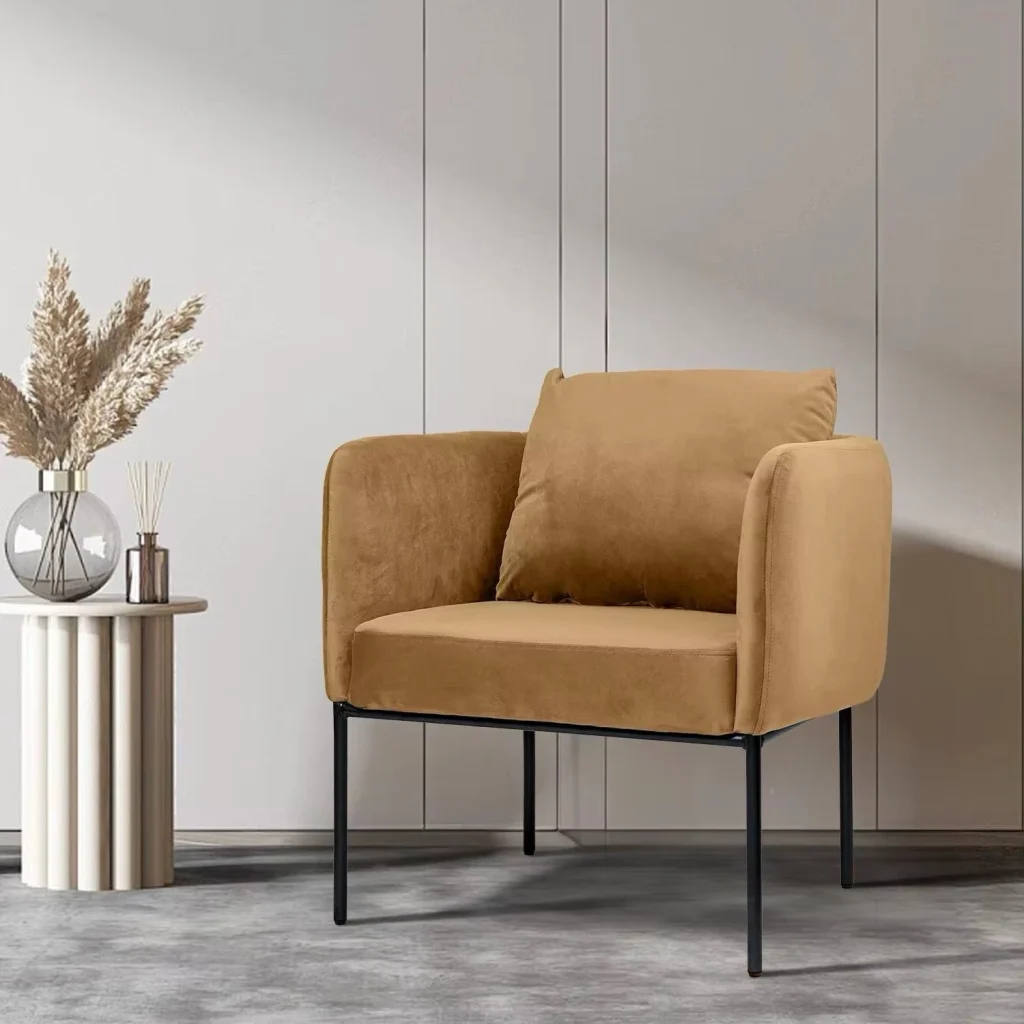
A minimalist lounge chair is a statement of restraint and precision. Its design is defined by clean lines, carefully considered angles, and an absence of unnecessary detailing. Often featuring a slim frame in wood or metal combined with neutral upholstery or leather, the chair feels visually light yet structurally confident. It occupies space without overwhelming it.
Unlike larger furniture pieces, a lounge chair allows minimalism to express itself in a concentrated form. Every curve, joint, and surface is intentional. The relationship between seat height, backrest angle, and arm support is engineered for comfort without excess cushioning, preserving the purity of the silhouette.
Placed in a living room, bedroom, or reading corner, a minimalist lounge chair becomes both a functional object and a sculptural accent. It embodies the idea that true minimalism is not about reduction alone, but about achieving harmony between use, aesthetics, and space.
Style rating: 10 / 10
■■■■■■■■■■
Why: A minimalist lounge chair distills the essence of the style into a single object — form, comfort, and proportion in perfect balance.
To buy this product, click here.
2. Minimalist Credenza
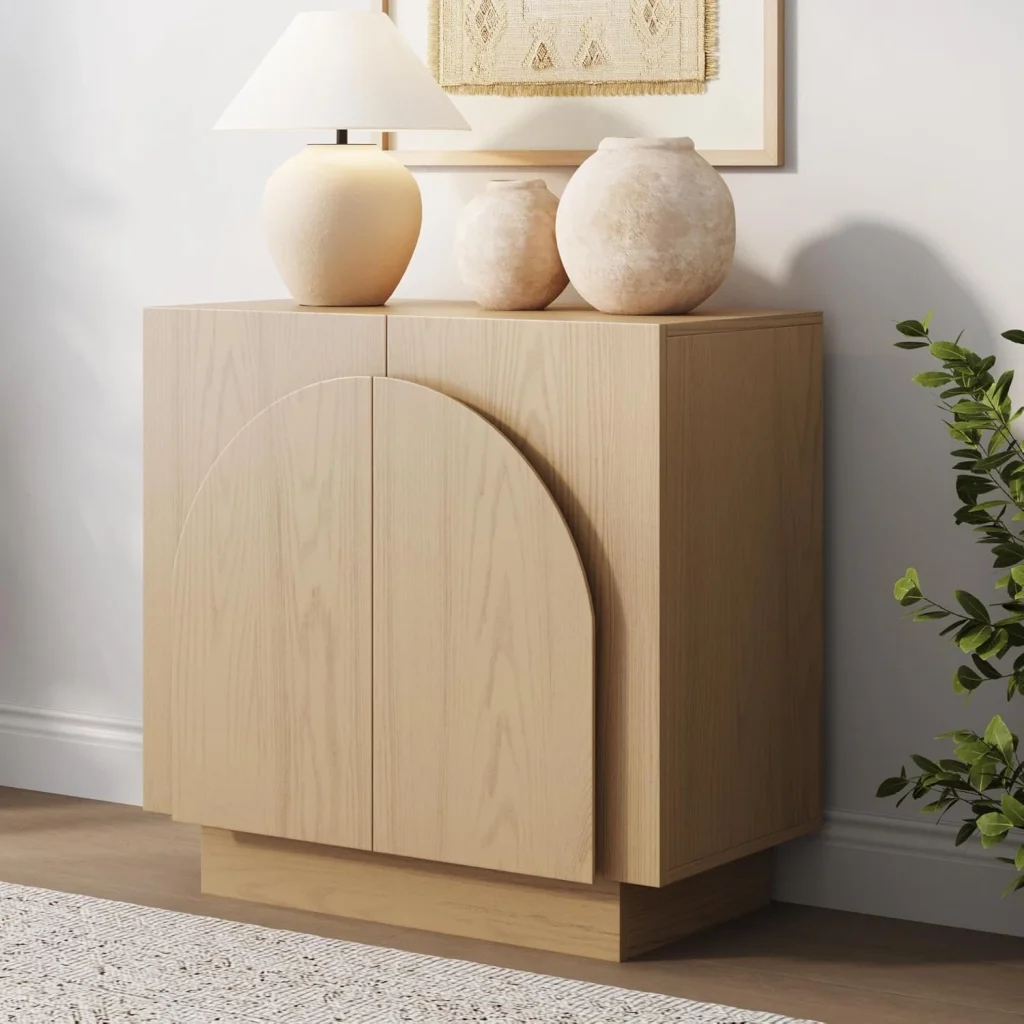
A minimalist sideboard, often referred to as a credenza, is a horizontal storage piece defined by clean planes and precise proportions. Its design typically features flat fronts, push-to-open doors, and a low, elongated silhouette that emphasizes balance and stability. Materials range from natural wood veneers to matte lacquer finishes, all chosen to blend seamlessly into the surrounding space.
Functionally, the sideboard serves as a versatile storage solution — housing tableware, books, textiles, or electronics while keeping surfaces visually uncluttered. Its internal organization is carefully planned, allowing everyday items to disappear behind calm, uninterrupted facades.
From an aesthetic perspective, the sideboard acts as a quiet architectural element. It supports the minimalist principle of order while offering a surface for one or two carefully selected objects, reinforcing the idea that storage can be both practical and refined
Style rating: 8 / 10
■■■■■■■■□□
Why: A minimalist sideboard combines visual restraint with strong functional value, enhancing the interior without dominating it.
To buy this product, click here.
3. Sculptural Table Lamp
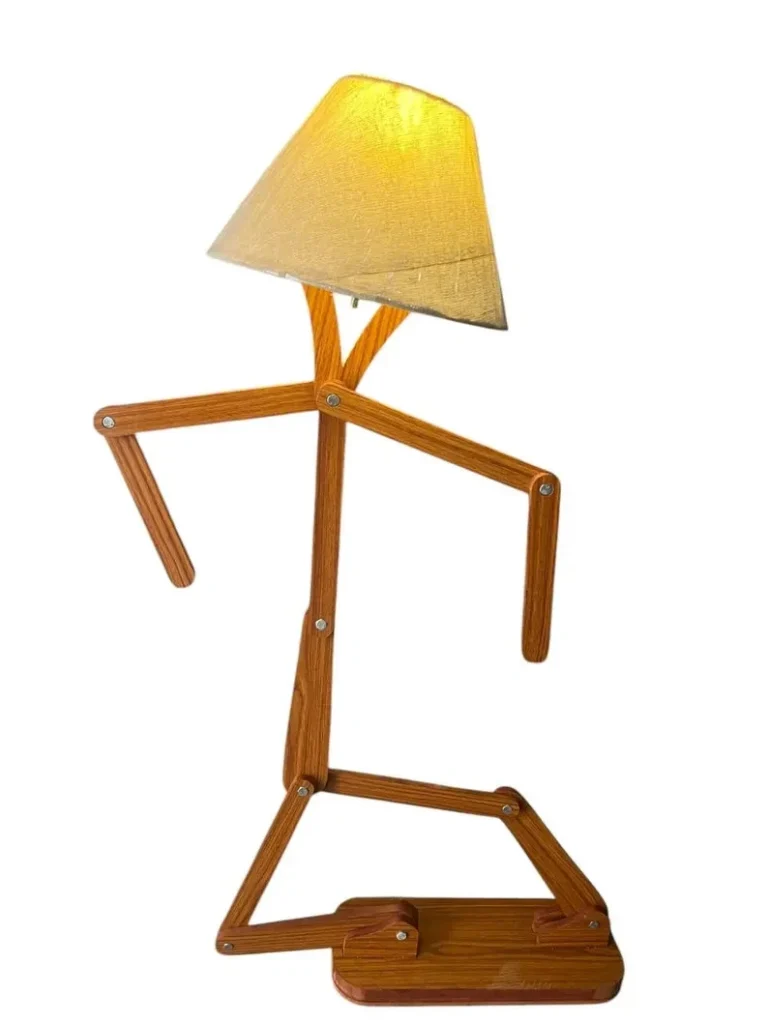
Sculptural lamps play a critical role in minimalist interiors by combining light and form into a single expressive object. Their silhouettes are intentional and precise — slender stems, curved shades, or geometric bases that feel almost architectural. Finishes are typically matte or softly reflective, avoiding visual noise.
Light itself is treated gently. Rather than harsh brightness, these lamps create ambient illumination that enhances textures and spatial depth. Shadows become part of the design, adding nuance without complexity.
Placed thoughtfully, a sculptural lamp can punctuate a room, guiding the eye vertically or highlighting negative space — a key element of minimalist composition.
Style rating: 9 / 10
■■■■■■■■■□
Why: Minimalist lighting often doubles as art, adding character through silhouette rather than decoration.
To buy this product, click here.
4. Neutral Area Rug
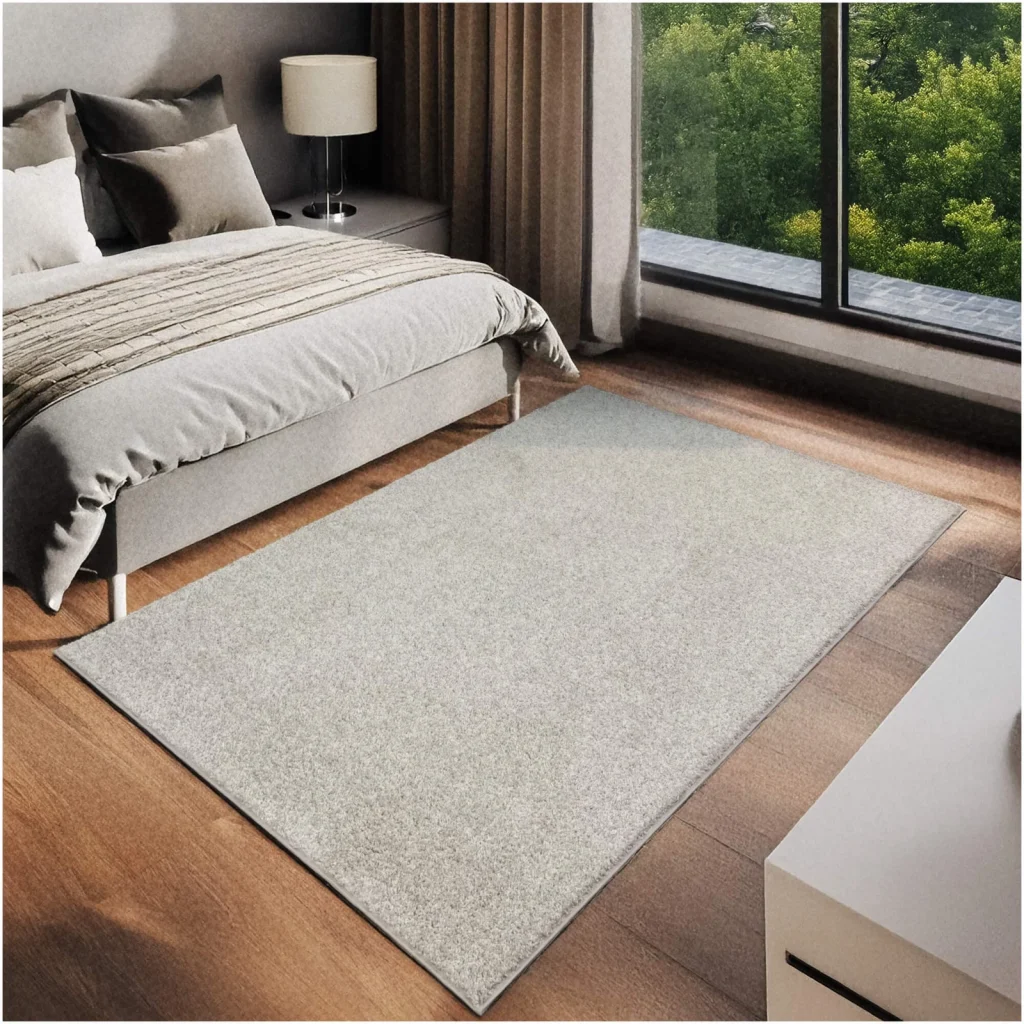
A neutral area rug functions as a silent connector within a minimalist interior. Its primary role is not visual impact but spatial cohesion — defining zones, anchoring furniture, and softening transitions between surfaces. Patterns, if present, are understated to the point of near invisibility.
Texture becomes the main design language. Wool, jute, or flatwoven fibers add depth and warmth while remaining visually restrained. Color palettes stay close to the floor or wall tones, reinforcing continuity rather than contrast.
The rug’s success lies in its restraint. By staying in the background, it allows other elements — light, furniture, architecture — to breathe freely.
Style rating: 6 / 10
■■■■■■□□□□
Why: Essential for comfort and cohesion, but intentionally subtle — its role is supportive rather than expressive.
To buy this product, click here.
5. Abstract Wall Art
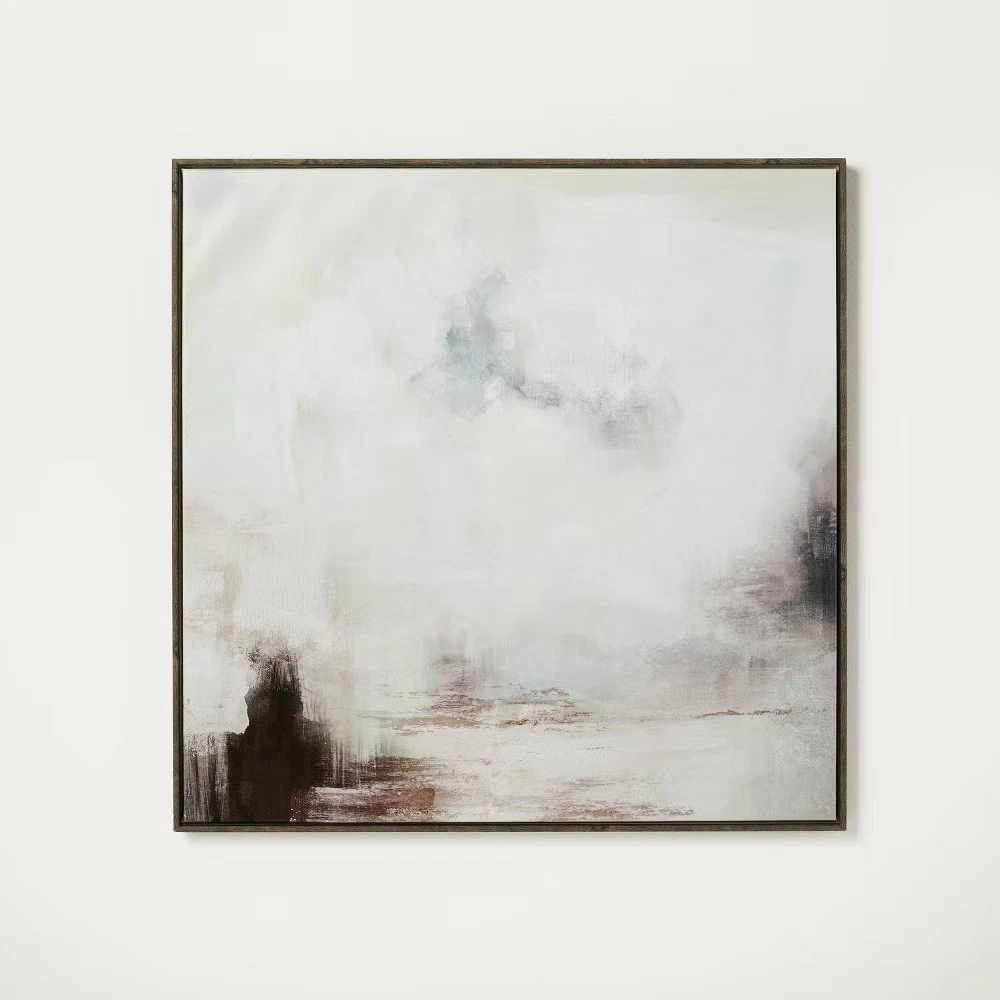
Abstract wall art introduces emotion into minimalist interiors without narrative or excess detail. Forms are simplified, palettes are limited, and compositions often rely on balance rather than focal complexity. This allows the artwork to feel integrated rather than imposed.
In minimalist spaces, fewer pieces are chosen, but each one carries weight. A single large canvas or a carefully paired set can transform an empty wall into a contemplative surface without overwhelming the room.
The artwork becomes a moment of pause — a visual breath — reinforcing the calm rhythm of the space while subtly expressing individuality.
Style rating: 8 / 10
■■■■■■■■□□
Why: When carefully selected, abstract art adds personality and depth while respecting minimalist restraint.
To buy this product, click here.
6. Minimalist Coffee Table
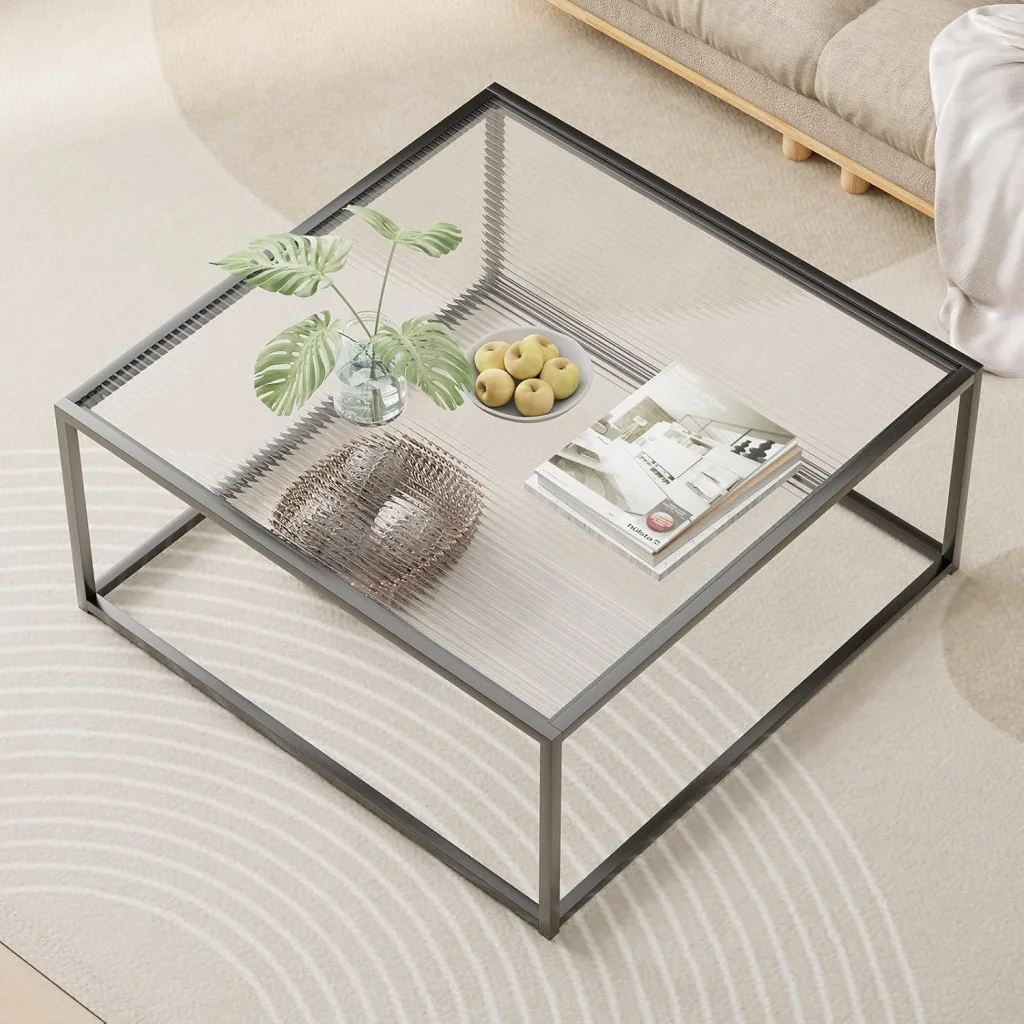
A minimalist coffee table is defined by clarity of form and proportion. Whether round, rectangular, or subtly asymmetrical, its design avoids excess detailing and focuses on clean geometry. Materials such as solid wood, stone, glass, or matte metal are often left visually exposed, allowing texture and construction to speak for themselves.
In minimalist interiors, the coffee table plays a central compositional role. Positioned between seating elements, it connects the space horizontally and reinforces order. The height, thickness of the tabletop, and leg structure are carefully balanced so the table feels grounded yet visually light.
Beyond function, the coffee table supports the minimalist principle of intentionality. It holds only what is necessary — perhaps a book, a ceramic object, or a tray — making it both a practical surface and a calm focal point within the living room.
Style rating: 9 / 10
■■■■■■■■■□
Why: A minimalist coffee table acts as a visual anchor, bringing structure and balance to the living area without adding visual noise.
To buy this product, click here.
7. Ceramic or Stone Decorative Objects
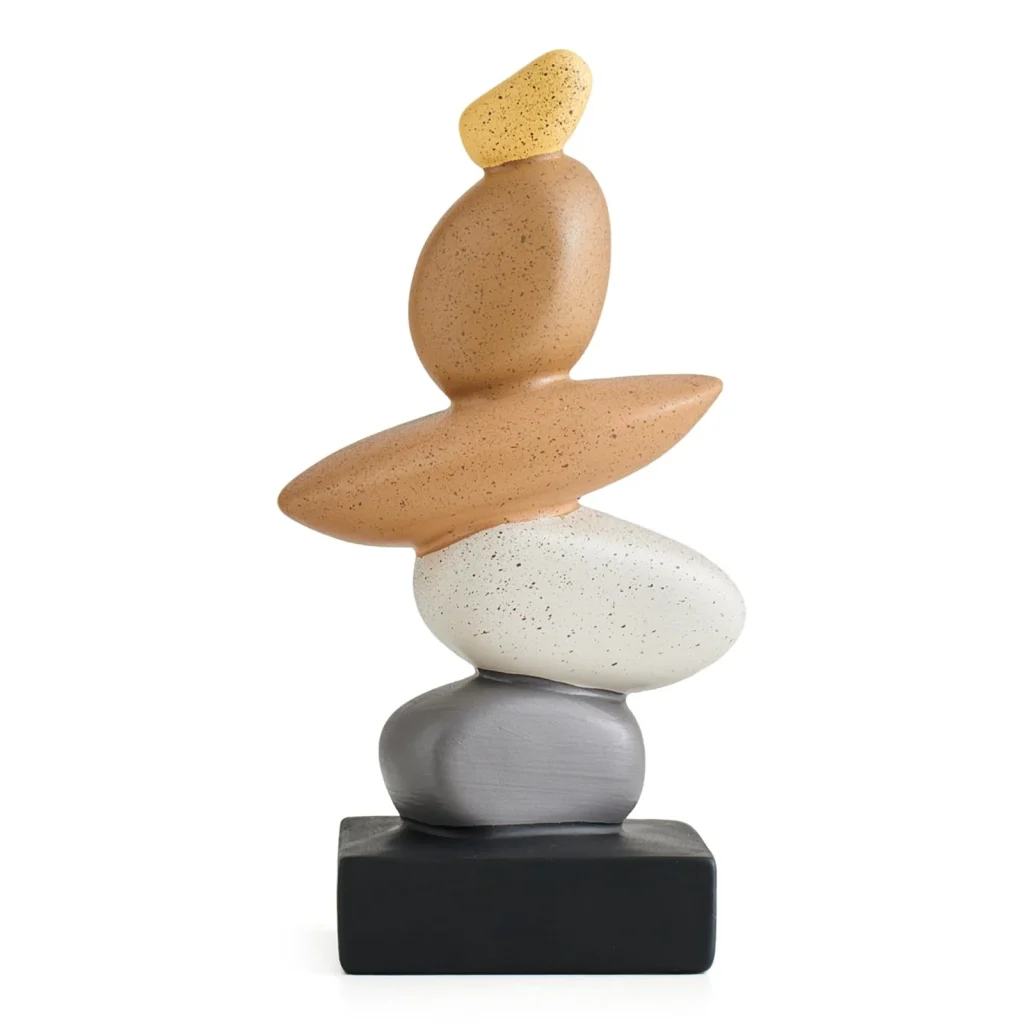
Decorative objects in minimalism act as accents rather than embellishments. A ceramic vase or stone bowl introduces tactility and material contrast, often celebrating handcrafted imperfection within a controlled environment.
These objects are chosen for form, weight, and surface rather than color or ornament. Their placement is deliberate — isolated on a table, shelf, or console — allowing negative space to amplify their presence.
When used sparingly, such objects add warmth and humanity without disrupting visual balance.
Style rating: 7 / 10
■■■■■■■□□□
Why: Minimalist decor relies on intention — a single object can be powerful, but only in moderation.
To buy this product, click here.
8. Platform Bed with Clean Lines
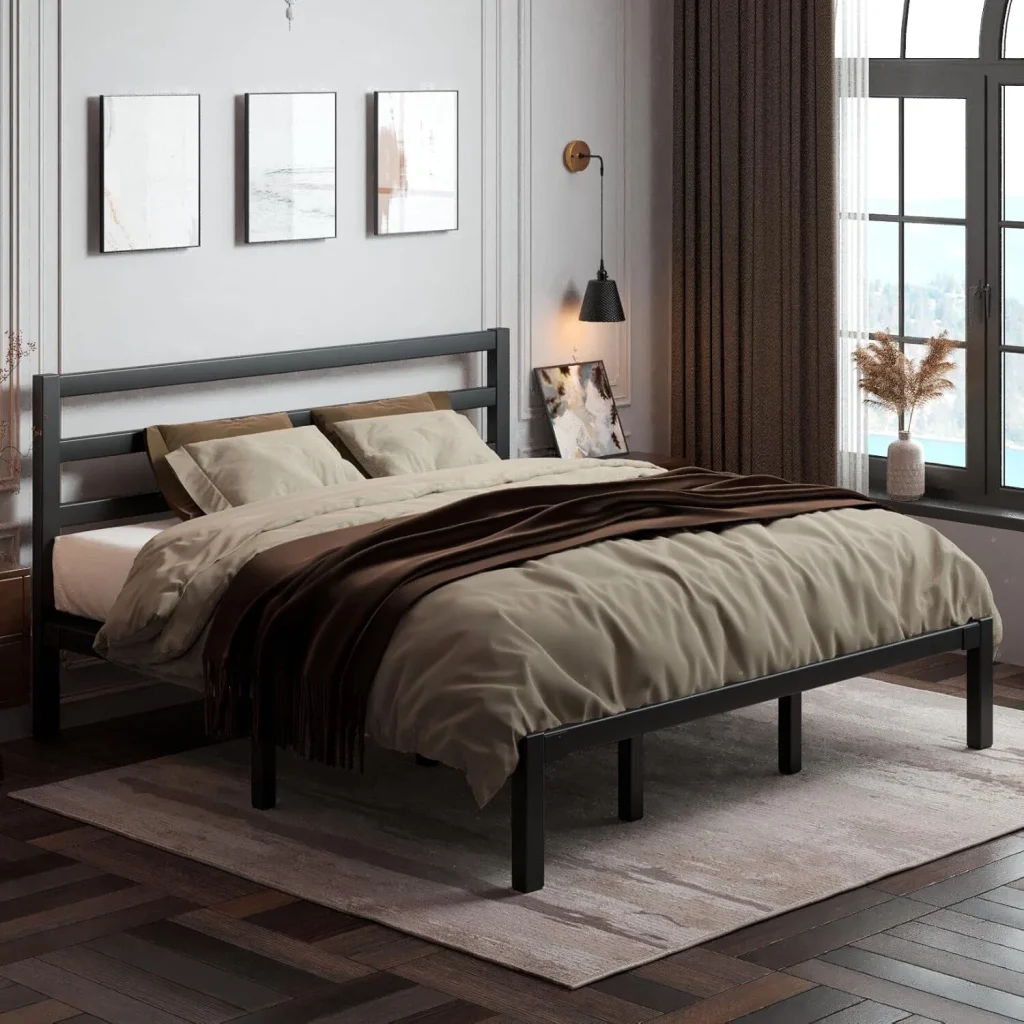
A platform bed with clean lines establishes a sense of grounding and stillness in the bedroom. Its low profile reduces visual weight, while a simplified frame emphasizes horizontal calm — ideal for rest-oriented spaces.
The absence of ornament allows materials to speak: natural wood, soft upholstery, or matte metal. This restraint creates a timeless quality that doesn’t compete with bedding or light.
In a minimalist bedroom, the bed is not a statement — it is a foundation for calm, clarity, and uninterrupted rest.
Style rating: 8 / 10
■■■■■■■■□□
Why: A strong foundational piece that defines the bedroom’s atmosphere without visual excess.
To buy this product, click here.
How Can a Professional Designer Help?
Minimalism may appear simple on the surface, but achieving a truly balanced minimalist interior requires experience, precision, and a deep understanding of space. A professional interior designer helps transform the idea of “less” into a well-structured, functional, and emotionally comfortable environment.
Translating Vision into a Clear Concept
One of the most valuable contributions of a designer is the ability to translate abstract preferences into a coherent design concept. Many people are drawn to minimalism without fully understanding what version of the style suits their lifestyle. A designer helps define the right balance between restraint and comfort, ensuring the space feels personal rather than generic.
Optimizing Space and Layout
Minimalist interiors rely heavily on proportion, flow, and spatial logic. A professional designer analyzes how the space is used, optimizing layouts to improve circulation, natural light, and visual clarity. This often includes rethinking room boundaries, furniture placement, and storage solutions to make the space feel open yet functional.
Material and Furniture Selection
In minimalism, materials are exposed and uncompromising — which means quality matters. A designer guides you in selecting durable finishes, timeless furniture, and textures that age well. Instead of filling the space with objects, they help you invest in fewer, better pieces that support both aesthetics and longevity.
Avoiding Common Minimalist Mistakes
Without professional guidance, minimalist interiors can easily become cold, empty, or impractical. Designers help avoid pitfalls such as excessive uniformity, lack of warmth, or insufficient storage. They introduce subtle contrasts, layered lighting, and tactile elements that make the space livable and inviting.
Creating Cohesion and Long-Term Value
A professional designer ensures that every element — from color palette to lighting and accessories — works together as a unified whole. This cohesion not only enhances daily comfort but also increases the long-term value of the interior. A well-designed minimalist space remains relevant, functional, and aesthetically pleasing for years to come.
Ultimately, a designer doesn’t just create a minimalist interior — they shape an environment that supports your lifestyle, reflects your values, and brings lasting clarity and calm to your home.
Conclusion
Minimalism in interior design is not a trend, but a conscious way of shaping the space around you. It is about clarity, balance, and intention — choosing objects and solutions that support both your daily life and your sense of calm. When every element has a purpose, the interior begins to feel lighter, more open, and more meaningful.
The products explored in this article demonstrate how minimalism works in practice: through thoughtful furniture, honest materials, restrained color palettes, and intelligent use of space. From foundational pieces like sofas and beds to subtle accents and lighting, each element contributes to a cohesive and harmonious environment.
Ultimately, a successful minimalist interior is not about having less for the sake of reduction, but about creating room for quality, comfort, and longevity. With careful choices — and, when needed, the guidance of a professional designer — minimalism becomes a timeless framework for living well, not just decorating a home.
