
Fitness trackers have quietly gone from niche gadgets to everyday essentials. For many people, they’re the first thing you put on in the morning and the last thing you take off at night. Whether you’re trying to lose weight, sleep better, or just move a little more, a tracker turns vague “I should be healthier” into clear numbers, trends, and goals you can actually act on.
Affiliate Disclosure — UsefulHomeTools
Some links on UsefulHomeTools direct you to eBay and other retailers. If you click a link and make a purchase, we may receive a commission at no extra cost to you.
These commissions help us test home tools and create guides for DIYers. Recommendations are based on our research and are not influenced by any affiliate partnership.
Another reason they’ve become so popular is accountability. A fitness band (or ring, or watch) doesn’t judge you, but it does remember. Steps, heart rate, active minutes, sleep – everything is logged, so it’s harder to pretend that “I was pretty active today” when your data says you barely moved. For many people that gentle nudge is exactly what keeps them consistent.
Modern trackers also go far beyond simple step counting. They monitor heart rate 24/7, estimate calories burned, analyze sleep stages, and can even flag periods of stress or recovery. Over weeks and months you start to see patterns: what ruins your sleep, what workouts spike your heart rate, which habits actually make you feel better. This kind of insight is almost impossible to get without continuous tracking.
 GetHomeTools — your best choices for home
Convenience is another big factor. Your phone can track some things, but you don’t sleep with it on your wrist or in your pocket, and you definitely don’t wear it in the pool or under the shower. Wearables are designed to stay with you: waterproof, comfortable, light, and increasingly discreet. The result is 24/7 data with almost zero effort.
Finally, fitness trackers turn health into a kind of game. Rings that close, badges you unlock, step streaks, weekly reports – all of this taps into our natural love of progress. Instead of relying on willpower alone, you have small daily goals and instant feedback. That’s why even relatively simple wearables can make such a big difference over time.
Colmi R12 Smart Ring Health Tracker
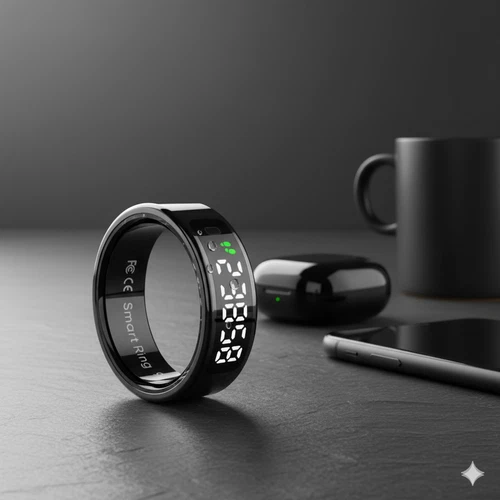
The Colmi R12 is a smart ring that packs a full fitness tracker into a small, stylish form factor. Instead of wearing a watch-sized screen on your wrist, you get a minimalist ring that tracks heart rate, blood oxygen (SpO₂), sleep, and even stress levels around the clock. Those metrics are sent to a companion app where you can browse your daily and weekly trends.
Despite its size, the R12 includes multiple sports modes for tracking different types of exercise and offers 5ATM water resistance, meaning it’s suitable for swimming and everyday water exposure. Combined with a touch display on the ring itself, it aims to provide enough information at a glance while keeping detailed analysis inside the app.
Pros:
- Discreet form factor – looks like a regular ring, not a gadget
- Tracks heart rate, SpO₂, sleep quality, and stress 24/7
- 5ATM water resistance suitable for swimming and showering
- Multiple sports modes for different workout types
- Compatible with smartphones via Bluetooth and companion app for insights
Cons:
- Small display limits how much information you can see directly on the ring
- Ring sizing can be tricky; you have to get the fit right for accurate readings
- Less screen space and fewer “smartwatch” features than a full-size watch
- App ecosystem and integrations are more limited than big-name brands
- May feel uncomfortable for people who are not used to wearing rings during workouts or sleep
2025 NEW Fit@bit Smart Watch Activity Tracker
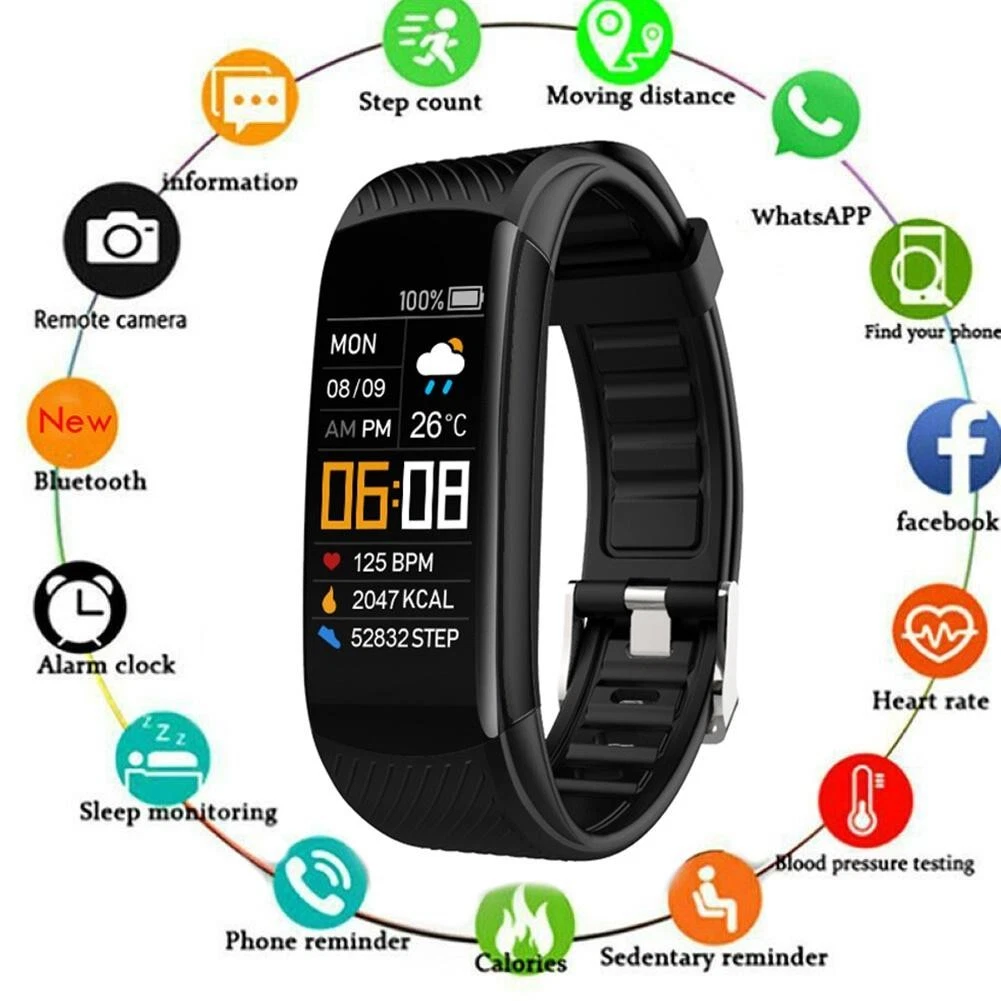
The 2025 NEW Fit@bit Smart Watch Activity Tracker is a budget-friendly fitness watch aimed at people who want the basics: step counting, heart-rate monitoring, and activity tracking without paying premium-brand prices. Listings describe it as a heart-rate smart bracelet with an activity-tracker focus, so think of it as an entry-level smartwatch rather than a fully featured sports watch.
It uses a compact 0.96-inch display with a 160×80 resolution and a plastic body, paired with a lightweight strap. Inside, there’s a 90 mAh battery – modest but typical for low-cost trackers of this size – and the usual range of basic functions like time, steps, and heart rate. Overall, it’s designed to be simple, light, and inexpensive rather than packed with advanced sensors.
Pros:
- Very affordable price point compared to big fitness brands.
- Lightweight plastic body and slim strap for comfortable everyday wear.
- Includes a heart-rate sensor and basic activity tracking features.
- Small 0.96″ screen keeps the watch compact on the wrist.
- Good “first tracker” for people who just want steps, time, and simple stats
Cons:
- Low-resolution display (160×80) makes graphics and text less sharp.
- 90 mAh battery likely means shorter battery life than larger, more efficient models.
- Limited information about advanced health metrics (sleep stages, stress, etc.)
- Unknown brand for many users, with less proven long-term support and app quality
- Few advanced features like built-in GPS, NFC payments, or a large app ecosystem
HEALBE GoBe3 Smart Band – Automatic Calorie In & Out Tracker
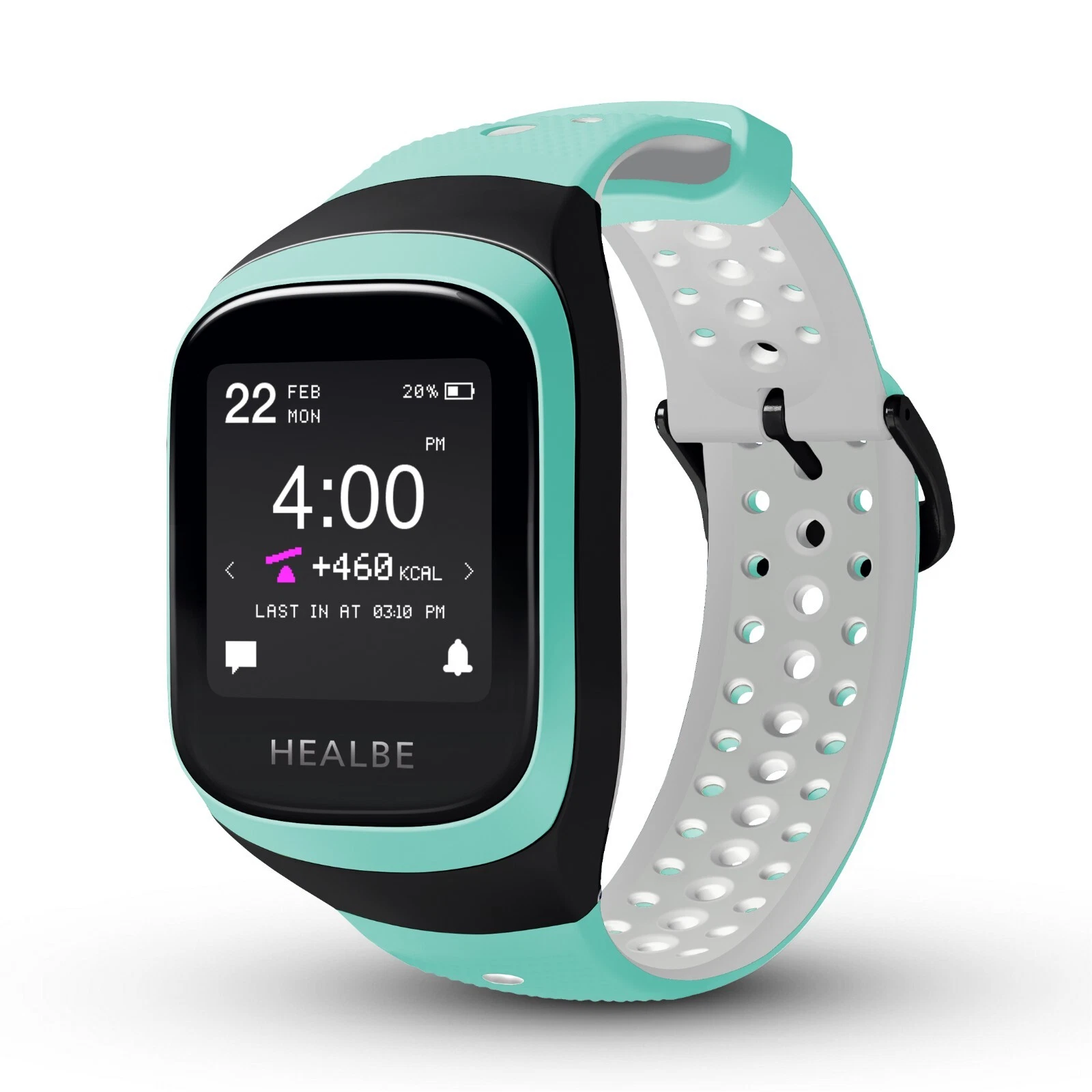
The HEALBE GoBe3 is a very different kind of fitness band. Instead of just counting steps and estimating calories from activity, it’s designed to automatically track calorie intake as well as calories burned, giving you a live view of your energy balance. HEALBE does this using a combination of bioimpedance, motion, optical, and EDA sensors to estimate how your body processes food and drink – so you can theoretically skip manual food logging.
Beyond calories, the GoBe3 also tracks hydration, heart rate, sleep quality, stress levels, and general activity. It sends all of this to the HEALBE app, where you can view trends, see how your body reacts to daily routines, and sync with platforms like Apple Health and Google Fit. It’s positioned as a wellness band for people who want deeper, more automatic insight into their bodies, not just step counts.
Pros:
- Unique automatic calorie intake tracking – no manual food logging required
- Tracks hydration levels and reminds you to drink before you feel dehydrated
- Monitors heart rate, sleep, stress, and “energy balance” 24/7
- Uses multiple sensors (bioimpedance, motion, optical, EDA) for richer data
- Integrates with the HEALBE app and can sync with Apple Health / Google Fit
Cons:
- More expensive than simple fitness bands and budget watches
- Bulkier on the wrist than minimalist trackers or rings
- Proprietary algorithms – some users may question the accuracy of automatic calorie intake estimates
- To get reliable readings, you need to wear it consistently and fairly snugly
- Rich data and features come with a learning curve in the app
How These Three Wearables Compare – And Who They’re For
Putting these three devices side by side highlights how diverse modern “fitness bracelets” have become. The Colmi R12 compresses health tracking into a tiny ring, ideal if you don’t want to wear a visible gadget on your wrist. The Fit@bit watch represents the ultra-budget segment: a simple screen, plastic body, and basic tracking at the lowest possible cost. The HEALBE GoBe3, meanwhile, aims at people who want advanced, almost lab-like insights into calories and hydration, with technology you won’t find in mainstream trackers.
If your priority is discretion and comfort, the smart ring is the most “invisible” option. It works for office workers, people who don’t like wearing watches, or anyone who wants sleep and stress tracking without changing their style. The trade-off is a smaller display and fewer “smartwatch” functions – you’re choosing minimalism and subtlety over big screens and apps.
The Fit@bit watch is for the opposite kind of user: someone who just wants something cheap that counts steps, shows the time, and occasionally checks heart rate. You’re not paying for brand prestige or cutting-edge sensors – and you’re not getting them either. That’s not necessarily bad: for a beginner who isn’t sure they’ll use a tracker long-term, a low-cost device is a painless way to experiment.
HEALBE’s GoBe3 is clearly targeted at people who are already serious about health metrics or have specific goals like weight management, nutrition awareness, or stress monitoring. Automatic calorie intake tracking and hydration monitoring go far beyond typical trackers, but they also require trust in the technology and a willingness to pay more, wear the band consistently, and dive into complex data.
Together, these devices also illustrate an important truth: there is no “best” fitness tracker in general – only a best fit for a specific person. If you care about style and forget you’re even wearing the device, the Colmi R12 ring will feel perfect. If your budget is tight or you just want a starter watch, the Fit@bit tracker makes sense. If you’re fascinated by the idea of your band estimating your calorie intake and monitoring your hydration automatically, the GoBe3 stands in a category of its own.
In the end, all three wearables aim at the same goal: to give you more awareness of how you live, move, eat, and recover – and to turn that awareness into better choices. The form factor, the price, and the depth of data are different, but the underlying mission is identical. The “right” choice is simply the one you’ll actually wear every day and enjoy using, because that’s what turns a piece of hardware into real, lasting habit change.